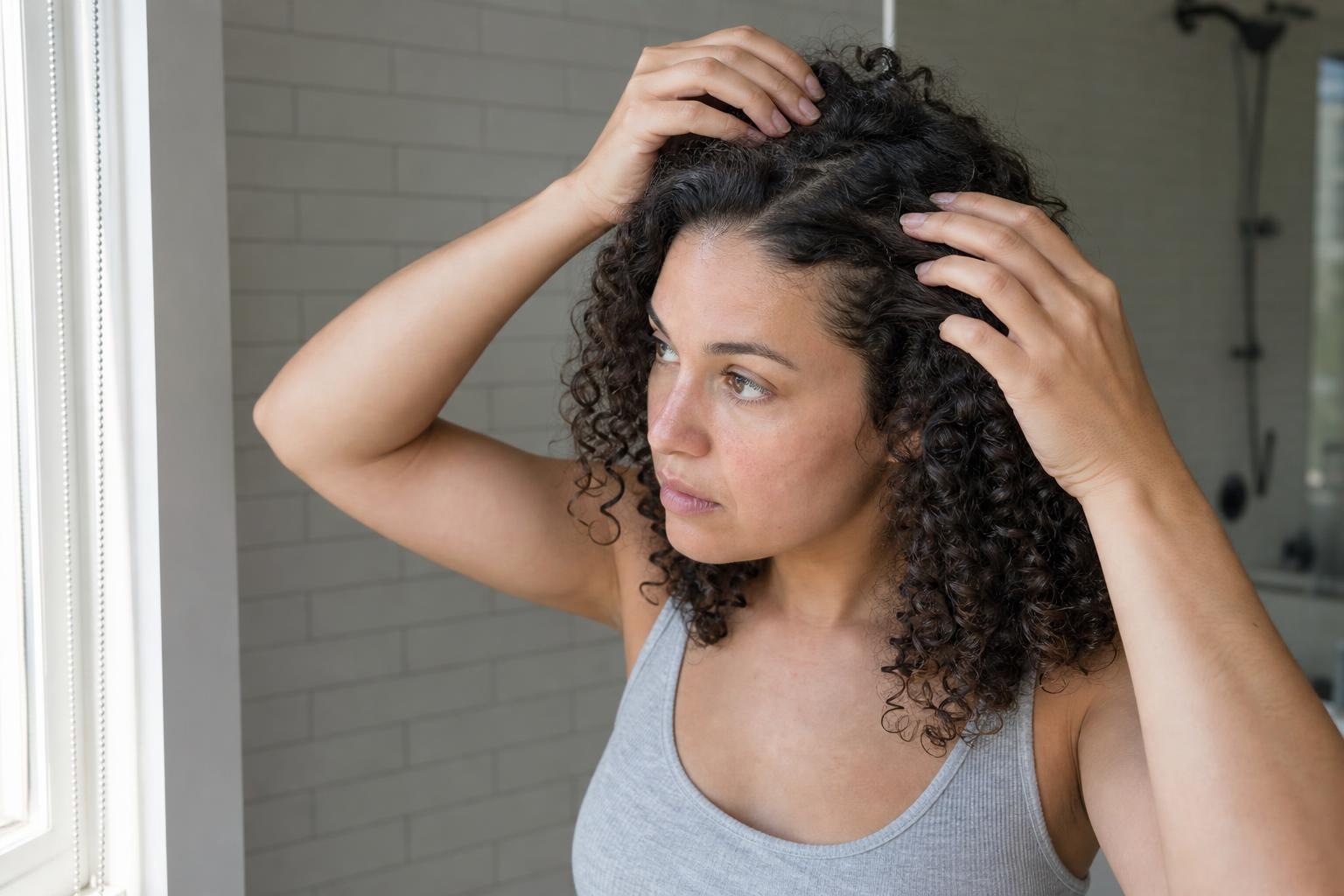
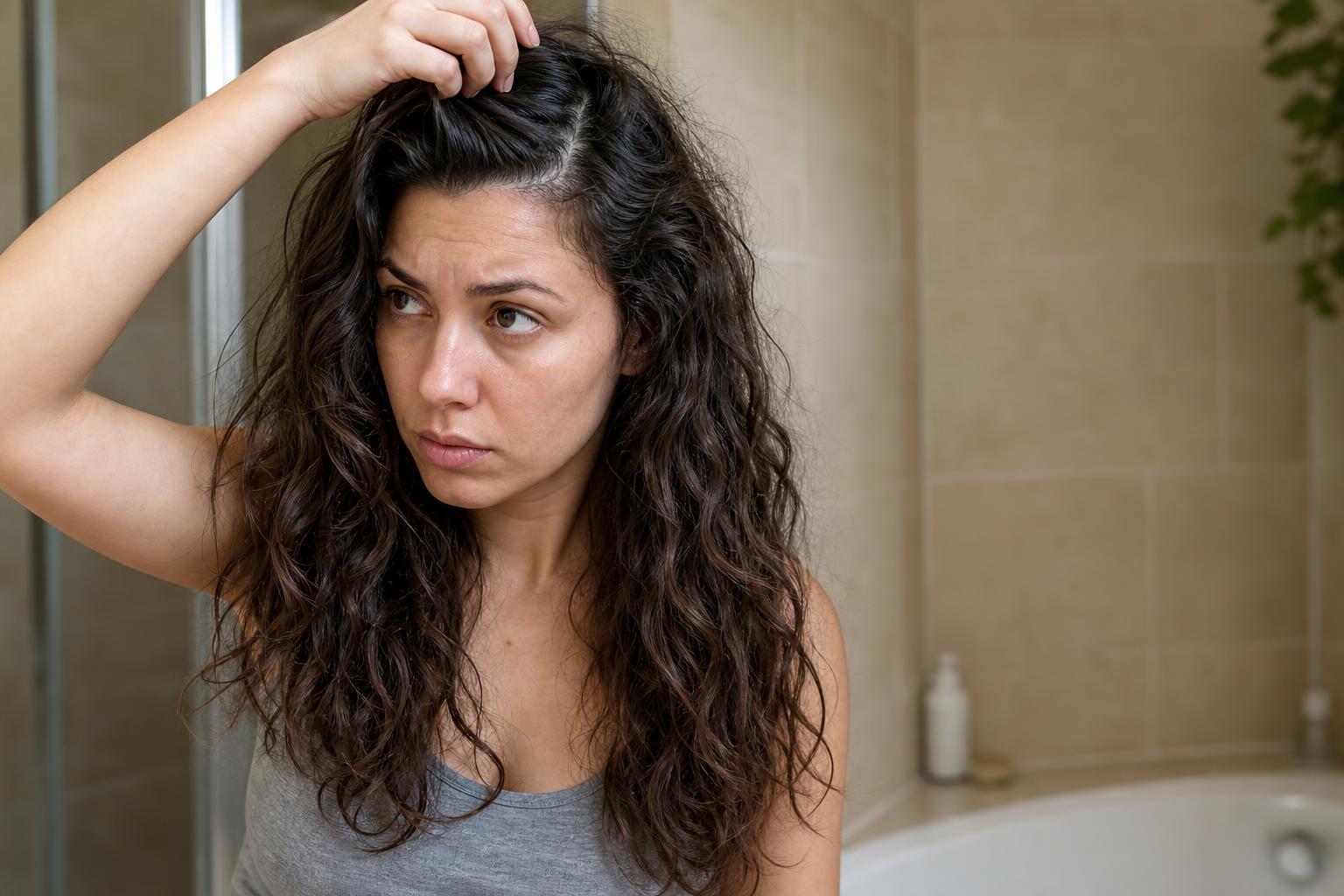
Curly hair damage shows up differently than it does on straight hair, often manifesting as lost curl pattern, excessive frizz, and breakage that seems impossible to tame. The good news is that with the right understanding of protein-moisture balance and targeted treatments, you can bring your damaged curls back to life and prevent future harm.
How to Know If Your Curly Hair Is Damaged
Before you can fix damaged curls, you need to accurately identify what damage actually looks like on textured hair. Many people mistake normal curl behavior (like shrinkage or some frizz) for damage, while others overlook genuine signs of trouble.
Signs of Damage Across Different Curl Types
Damage presents differently depending on your curl pattern. On type 2C hair care patterns and looser waves, damage often shows up as limp, undefined waves that won’t hold their shape, along with split ends that are clearly visible when hair is wet. The waves may start to straighten at the roots while remaining frizzy at the ends.
For type 3 curls, damage typically appears as inconsistent curl patterns where some sections form tight spirals while others hang loose and stringy. You might notice individual strands that refuse to clump with neighboring curls, creating a halo of frizz. The curls may also feel rough or straw-like to the touch rather than soft and springy.
On type 4A hair and tighter coily patterns, damage often manifests as extreme dryness, white-looking ends (indicating severe moisture loss), and breakage concentrated at the crown or nape. The coils may lose their defined zigzag pattern and become limp or fail to shrink as much as healthy sections do.
The Stretch Test: Checking Your Hair’s Elasticity
Healthy curly hair has elasticity, meaning it can stretch and return to its original length without breaking. To test this, take a single wet strand and gently pull it between your fingers. Healthy hair should stretch about 50% of its length and bounce back when released.
If your hair snaps immediately with little to no stretch, it’s protein-deficient and severely damaged. If it stretches excessively (more than 50%) and doesn’t return to its original length, remaining limp and elongated, it’s over-moisturized and lacking protein structure. According to hair shaft damage and repair mechanisms research, this elasticity reflects the integrity of the hair’s cortex layer.
Porosity Changes After Damage
Damage almost always increases hair porosity. Your hair cuticle, which naturally lies flat on healthy hair, becomes raised and sometimes chipped away through chemical processing, heat damage, or mechanical stress. This creates gaps that allow moisture to enter quickly but also escape just as fast.
You can test porosity changes by taking a few shed hairs and placing them in a glass of water. If they sink quickly, your hair has become high-porosity due to damage (even if you naturally have low porosity hair). High-porosity damaged hair feels dry shortly after moisturizing, frizzes easily in humid conditions, and takes forever to dry because water gets trapped inside the shaft.

Understanding the Protein-Moisture Balance
The single most important concept in repairing damaged curls is the protein-moisture balance. Your hair is made of keratin protein, but it also needs water and humectants to remain flexible and elastic. Damaged curls almost always need both, just in different proportions at different times.
Why Curly Hair Needs Both Protein and Moisture
Think of protein as the scaffolding of your hair shaft and moisture as the flexibility that allows movement. When hair is damaged, holes form in the protein structure (literally gaps in the cortex where keratin has degraded). These gaps make hair weak and prone to breakage.
Protein treatments temporarily fill these gaps with hydrolyzed proteins small enough to penetrate the hair shaft. However, protein alone makes hair stiff and brittle. That’s where moisture comes in. Water, combined with humectants like glycerin and emollients like oils, keeps the protein-repaired structure flexible and soft.
Curly hair needs this balance more than straight hair because the twists and turns in each strand create natural weak points. Damaged curls with protein-moisture imbalance will either snap off (too much protein, not enough moisture) or stretch and break (too much moisture, not enough protein).
Signs You Need Protein vs. Moisture
Your curls will tell you what they need if you know how to listen. Hair that needs protein feels mushy when wet, stretches excessively without bouncing back, and looks limp with undefined curls. The strands may feel slippery or overly soft, almost gummy. This happens when you’ve been using only moisturizing products without any protein reinforcement.
Hair that needs moisture feels rough, dry, and brittle. It may snap easily when you try to detangle, and curls appear frizzy and straw-like. The hair might actually feel somewhat strong but has no flexibility. This occurs after too many protein treatments or when you’re not sealing in moisture properly.
Most damaged curly hair needs both, which is why the repair process involves alternating treatments rather than choosing one or the other.
How to Test Your Hair’s Current Needs
The wet assessment is your best tool. After washing, take a small section of hair and feel it while it’s thoroughly wet. Gently pull on it. Does it stretch like a rubber band and bounce back? That’s balanced hair (rare when damaged). Does it snap immediately? You need moisture and possibly protein. Does it stretch and stay stretched, feeling limp? You need protein urgently.
Pay attention to how your hair behaves after applying products. If it immediately soaks up your leave-in conditioner and still feels dry within hours, you have porosity damage and need both protein to patch the cuticle and heavier moisturizers to slow water loss. If products sit on top of your hair making it feel greasy or weighed down, you may actually need protein to create structure that allows moisture to penetrate properly.
Deep Conditioning Treatments for Damaged Curls
Deep conditioning forms the foundation of any curl repair routine. These intensive treatments work by penetrating the hair shaft more deeply than regular conditioners, depositing proteins, moisture, or both where damage has occurred.
Protein Treatments: When and How to Use
Protein treatments range from light (containing amino acids or silk proteins) to heavy-duty (with hydrolyzed keratin or wheat protein). For severely damaged curls, start with a moderate protein treatment once per week, then adjust based on your hair’s response.
Apply protein treatments to freshly washed, towel-dried hair. The cuticle is slightly open from washing, allowing better penetration. Work the treatment through in sections, ensuring every damaged area gets covered. Most protein treatments work best with heat, so sit under a hooded dryer or use a heat cap for 20-30 minutes.
The key mistake people make is using protein treatments too frequently. More is not better. Once your hair starts feeling stronger and you see improved elasticity, reduce protein treatments to every two to three weeks. Over-reliance on protein creates new problems, making hair brittle and prone to snapping.
Moisture-Rich Deep Conditioners
Between protein treatments, use moisture-rich deep conditioners containing humectants (glycerin, honey, aloe vera) and emollients (shea butter, coconut oil, avocado oil). These treatments hydrate the hair shaft and seal the cuticle, reducing frizz and improving manageability.
For high-porosity damaged hair, choose thicker, cream-based deep conditioners that coat the hair shaft and slow moisture loss. Apply generously to soaking wet hair, pile it on top of your head, cover with a plastic cap, and let it sit for at least 30 minutes. You can also sleep in a deep conditioner overnight for maximum penetration.
The ratio of protein to moisture treatments depends on your damage severity. A good starting point is one protein treatment followed by two to three moisture treatments per month, adjusting based on how your curls respond.
DIY vs. Professional Treatments
DIY deep conditioners can be effective for mild to moderate damage. Combinations like avocado and honey, banana and olive oil, or yogurt and egg provide both protein and moisture. However, these treatments work on the surface level and won’t repair severe structural damage.
Professional treatments like Olaplex, K18, or keratin reconstructors work at a molecular level to rebuild broken bonds inside the hair shaft. For severely damaged curls (especially from bleach or chemical straightening), investing in at least one professional treatment series can dramatically accelerate recovery. These treatments provide repair that DIY options simply cannot match, though they’re significantly more expensive.

Daily Recovery Routine for Damaged Curly Hair
Deep treatments repair damage, but your daily routine determines whether that repair sticks or gets undone. Damaged curls need gentle handling and consistent care every single day.
Gentle Cleansing Without Further Damage
Switch to a gentle sulfate-free shampoo or co-washing (conditioner-only washing) while your curls recover. Sulfates strip away natural oils that damaged hair desperately needs. Many people find that washing only once or twice per week allows their scalp’s natural sebum to travel down the hair shaft, providing natural conditioning.
When you do wash, focus shampoo only on your scalp. The length of your hair gets clean enough from the runoff as you rinse. Use cool or lukewarm water instead of hot, as heat further raises the cuticle and increases porosity. Research on preventing hair damage confirms that temperature control matters significantly.
Detangle only when hair is soaking wet and coated with conditioner, using your fingers or a wide-tooth comb. Start from the ends and work up to the roots, never yanking or pulling. This is when damaged hair is most vulnerable to breakage.
Leave-In Conditioners and Curl Creams
Damaged curls need layering. After washing, apply a water-based leave-in conditioner to soaking wet hair. This creates a moisture foundation. Then, while hair is still very wet, apply a curl cream or gel that contains both humectants and emollients.
The “praying hands” method works better than scrunching for damaged hair, as it smooths the cuticle rather than roughing it up. Apply products in downward motions, encouraging the cuticle to lie flat. For extra damaged ends, apply additional leave-in or a small amount of oil specifically to the last few inches.
Don’t skip the styling product. Damaged hair needs the hold and protection that gels or creams provide. These products form a cast that shields hair from environmental damage while it dries.
Protective Styling During Recovery
While your curls heal, minimize manipulation. Protective styles like loose braids, twists, or buns keep hair stretched and tucked away, reducing friction from clothing, pillows, and environmental exposure. Just ensure these styles aren’t too tight, as tension damage is still damage.
Sleep on a satin or silk pillowcase, or wrap your hair in a silk scarf or bonnet every night without exception. Cotton pillowcases create friction that roughens the cuticle, undoing your repair work while you sleep. This single change can make a noticeable difference within weeks.
For daytime protection, consider updos or pineappling (loosely gathering curls at the crown) to minimize environmental exposure. The less your damaged hair rubs against surfaces or gets hit by sun and wind, the faster it will recover.
What to Avoid While Repairing Damaged Curls
Knowing what not to do is just as important as knowing what to do. Certain practices will sabotage your repair efforts no matter how good your treatment routine is.
Heat Styling and Mechanical Damage
Put away the blow dryer, flat iron, and curling wand while your hair recovers. Heat damage is cumulative, and damaged hair has almost no heat tolerance. Even one flat iron session on already-compromised curls can cause permanent damage that won’t grow out, only cut out.
If you absolutely must use heat, apply a heat protectant to every section and keep tools below 300°F (150°C). Better yet, embrace air drying or diffusing on the coolest setting. Your repair timeline will be measured in months, not weeks, so a few months without heat styling is a small sacrifice for healthy curls.
Mechanical damage includes excessive brushing, rough towel drying, and tight hairstyles. Swap your terry cloth towel for a microfiber towel or old t-shirt. Never brush dry curly hair. Avoid elastic bands without fabric coating, and never wear the same hairstyle in the same position every day (constant tension in one spot causes breakage).
Harsh Ingredients and Over-Processing
Read your ingredient lists carefully. Avoid products with high concentrations of drying alcohols (alcohol denat, isopropyl alcohol, ethanol) in the first five ingredients. While some alcohols are fine (cetyl, stearyl), the simple ones evaporate quickly and leave hair drier than before.
Absolutely no chemical processing while repairing damage. No bleach, no permanent color, no relaxers, no perms. Even “damage-free” or “bond-protecting” chemical treatments add stress to already compromised hair. If you need color, use temporary rinses or henna-based products that deposit color without lifting the cuticle.
Watch out for protein overload. Some people get so focused on protein repair that they use protein-containing shampoo, conditioner, leave-in, and gel all in one routine. This is too much. You need protein strategically, not constantly.
Common Mistakes That Delay Recovery
The biggest mistake is impatience. People try a repair routine for two weeks, see minimal results, and switch to something new. Hair grows about half an inch per month, so visible recovery takes time. Commit to a routine for at least six to eight weeks before judging its effectiveness.
Another mistake is focusing only on products while ignoring technique. You can use the most expensive treatments in the world, but if you’re roughly detangling, sleeping on cotton, and using heat daily, you won’t see improvement. Technique and handling matter more than product selection for damaged curls.
Don’t skip trims. Holding onto damaged ends doesn’t help; it actually makes damage worse as splits travel up the hair shaft. Get a small trim (quarter to half inch) every eight to twelve weeks to remove the most damaged portions while keeping length. This accelerates overall recovery.
Preventing Future Damage to Curly Hair
Once you’ve invested months in repairing your curls, the last thing you want is to damage them again. Prevention is always easier than repair.
Heat Protection and UV Defense
If you occasionally use heat tools, make heat protectant non-negotiable. Look for products with silicones (dimethicone, cyclomethicone) or polymers that create a heat barrier between the tool and your hair shaft. Apply to every section, not just a quick spray over the whole head.
UV damage is real and often overlooked. The sun’s rays degrade the protein structure in hair just like they damage skin. Wear hats when spending extended time outdoors, or use products with UV filters (look for ingredients like benzophenone-4 or ethylhexyl methoxycinnamate). This is especially important in summer or tropical climates.
Chlorine and salt water are also threats. Before swimming, saturate your hair with fresh water and conditioner, then braid or bun it. The pre-soaked hair absorbs less chlorinated or salt water. Always rinse and deep condition immediately after swimming.
Trimming Schedule for Healthy Ends
Regular trims aren’t just for removing existing damage; they prevent damage from progressing. Split ends don’t heal on their own, and if left alone, they split further up the shaft creating Y-shaped or tree-branch splits that require cutting off inches instead of fractions.
Schedule trims every three to four months, even if you’re growing your hair out. A quarter-inch trim four times a year only removes one inch annually while potentially saving you from having to cut off three or four inches of severely damaged ends later. Find a stylist experienced with curly hair who understands that curl-by-curl trimming preserves shape better than blunt cutting.
Maintaining the Protein-Moisture Balance Long-Term
Once your curls are healthy again, don’t abandon the protein-moisture balance concept. Healthy hair still benefits from occasional protein treatments (once monthly for most people) to maintain strength, especially if you use styling products with hold or live in humid climates.
Pay attention to seasonal changes. Many people need more moisture in winter when indoor heating dries out hair, and more protein in summer when humidity causes over-swelling and weakening. Adjust your deep conditioning schedule based on how your hair feels, not a rigid calendar.
Keep a simple hair journal noting what treatments you use and how your hair responds. After a few months, you’ll see patterns that help you predict what your curls need before problems develop. This proactive approach prevents damage better than reactive repair.
Frequently Asked Questions About Damaged Curly Hair
- How long does it take to repair damaged curly hair?
- Mild to moderate damage typically shows noticeable improvement within 6-8 weeks of consistent protein-moisture balanced treatments, though complete recovery takes 3-6 months. Severe damage from bleach or chemical straightening may take 8-12 months, and some damage is permanent until you grow it out and cut it off.
- Can I repair damaged curls without cutting my hair?
- You can improve the appearance and health of damaged hair through treatments and proper care, but you cannot reverse severe structural damage. Treatments temporarily fill in gaps and smooth the cuticle, making hair look and feel better, but truly repairing means growing out new healthy hair and eventually trimming damaged ends.
- Why do my curls feel worse after protein treatment?
- This usually means you applied too much protein too frequently, causing protein overload. Hair becomes stiff, brittle, and prone to snapping. Fix this by doing a clarifying wash followed by a moisture-rich deep conditioner, and reduce protein treatments to once every 3-4 weeks instead of weekly.
- Should damaged curly hair be washed more or less often?
- Less often is generally better for damaged curls. Washing strips natural oils that damaged hair desperately needs. Most people see improvement washing just 1-2 times per week, co-washing between shampoos if needed, and refreshing curls with water and leave-in on non-wash days.
- Can heat damaged curls return to their original pattern?
- Heat-loosened curls may gradually return to their natural pattern as you grow out new undamaged hair and trim damaged ends, but severely heat-damaged sections often show permanent pattern loss. The hair must be cut off and replaced with new growth. Improvement is possible, but complete reversal of severe heat damage is not realistic.
- What’s the difference between dry hair and damaged hair?
- Dry hair lacks moisture but has intact structure and normal elasticity. It improves quickly with hydrating products and usually has even texture. Damaged hair has structural issues (broken protein bonds, raised cuticle), shows poor elasticity, has uneven texture, and takes months to repair. Dry hair needs moisture; damaged hair needs both protein and moisture.
Conclusion
Repairing damaged curly hair requires patience, consistency, and a clear understanding that both protein and moisture play essential roles in your hair’s structure. The damage you see today didn’t happen overnight, and the recovery won’t either. By correctly diagnosing your hair’s specific needs, alternating targeted treatments, and protecting your curls from further harm, you can restore strength, elasticity, and definition to even severely compromised curls.
Start today with one actionable change: assess your hair’s current protein-moisture balance using the stretch test, then choose either a protein treatment or moisture-rich deep conditioner for your next wash day based on what you discover. That single informed decision, repeated consistently over the coming weeks, will set your damaged curly hair on the path to genuine recovery.