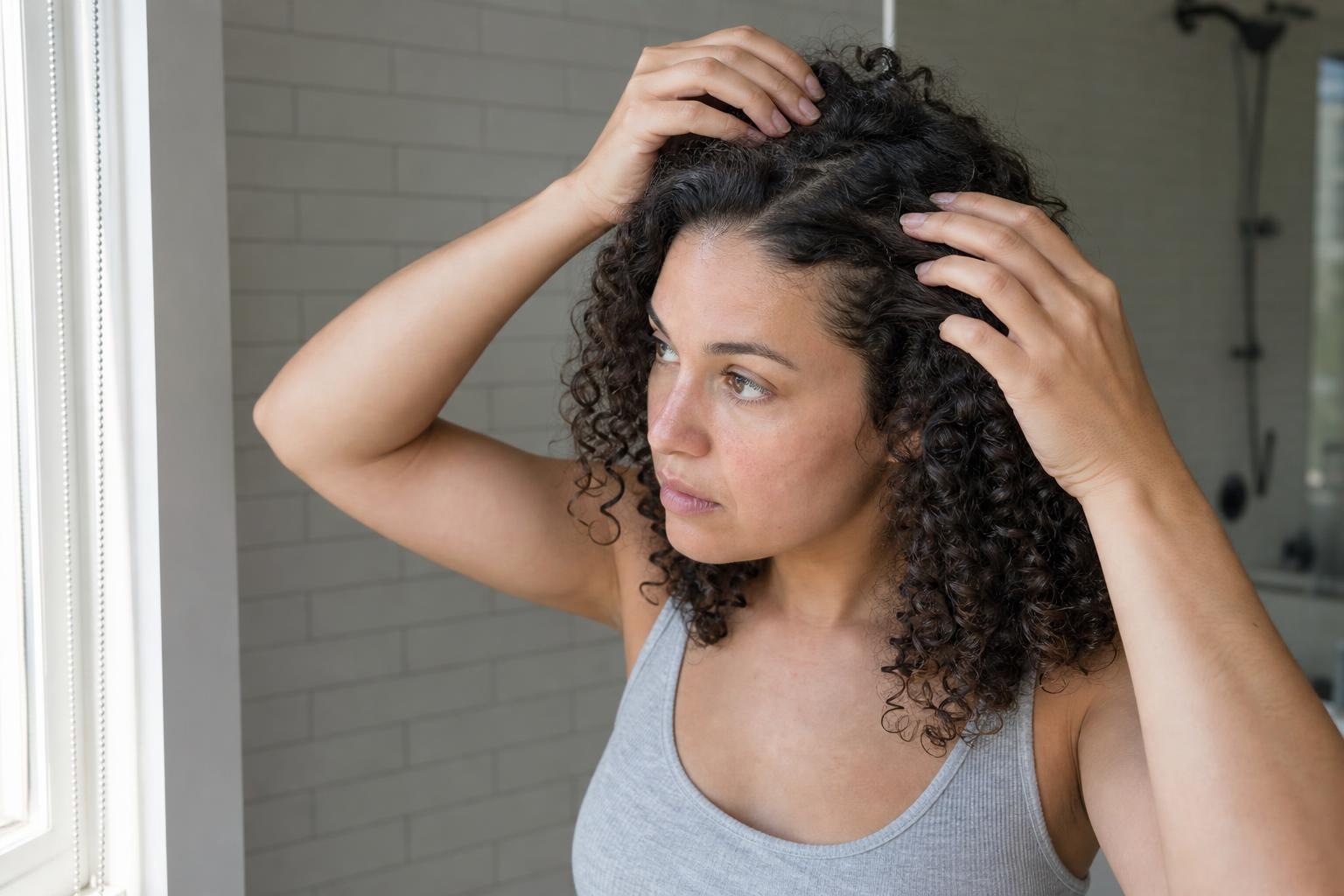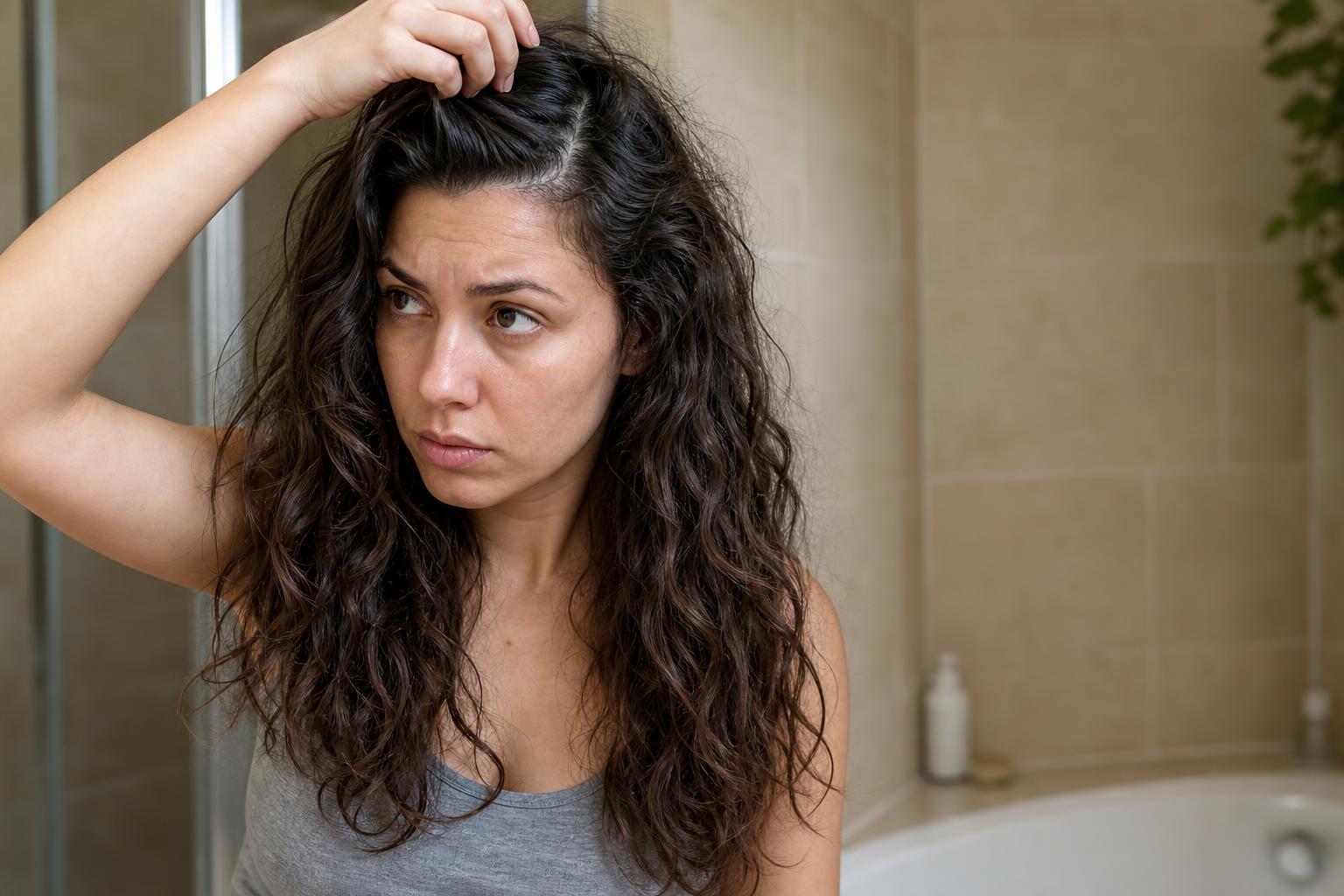
If you have curly or wavy hair that feels greasy at the roots but parched at the ends, you’re dealing with one of the most frustrating paradoxes in textured hair care. While straight-haired friends might battle uniform oiliness, your curl pattern creates a unique challenge where oil pools near your scalp but never makes it down the strand. Understanding why this happens and how to address it without triggering even more oil production requires a different approach than conventional advice.
Why Curly Hair Gets Oily at the Roots (But Dry at the Ends)
The Sebum Distribution Problem in Textured Hair
Your scalp produces sebum at roughly the same rate regardless of whether your hair is straight or curly. The difference lies entirely in how that oil travels down the hair shaft. On straight hair, sebum glides easily from root to tip, coating the entire strand and creating that uniform “greasy” look people complain about. But when you have type 2C hair routines or tighter curl patterns, those bends, twists, and spirals act as roadblocks. Oil accumulates at the scalp while your mid-lengths and ends remain chronically dry.
This creates a confusing situation where you might feel like you need to wash more frequently because of oily roots, yet your ends are crying out for moisture. According to research on scalp sebum production, sebaceous gland activity varies based on hormones, genetics, and environmental factors, but the mechanical barrier of curls prevents natural distribution regardless of production levels.
Product Buildup vs. Natural Oil Overproduction
Before you blame your scalp’s oil glands, consider whether what you’re experiencing is actually buildup rather than excess sebum. Curly hair routines typically involve multiple styling products, many of which contain ingredients that don’t rinse out easily with water alone. Silicones, heavy butters, and certain gels can accumulate on the scalp over time, creating a greasy feeling that has nothing to do with your natural oil production.
The telltale difference: true excess sebum typically appears within 24 to 48 hours of washing and feels slick or wet to the touch. Product buildup develops more gradually over several washes and often has a waxy or sticky texture. You might also notice that your hair feels coated or heavy, and products stop performing the way they used to. If you can’t remember the last time you used a shampoo formulated for textured hair with actual cleansing power, buildup is likely your primary issue.
How Your Hair Type Affects Oil Visibility
Finer, looser wave patterns show oil much more readily than coarser, tighter curls. If you’re working with fine wavy hair, even a small amount of sebum or product residue will make your roots look flat and stringy. The individual strands are thinner and more easily weighed down, so oil becomes visible faster. This doesn’t necessarily mean you’re producing more oil than someone with thicker curls, it just shows more obviously.
People with low porosity hair face an additional challenge. Their tightly sealed cuticles resist moisture absorption, which also means products and oils tend to sit on the surface rather than penetrating the strand. This surface accumulation at the roots can make low porosity curls look greasy faster, even when using lightweight products.
Immediate Relief: Quick Fixes for Greasy Curls
Dry Shampoo Application for Wavy and Curly Hair
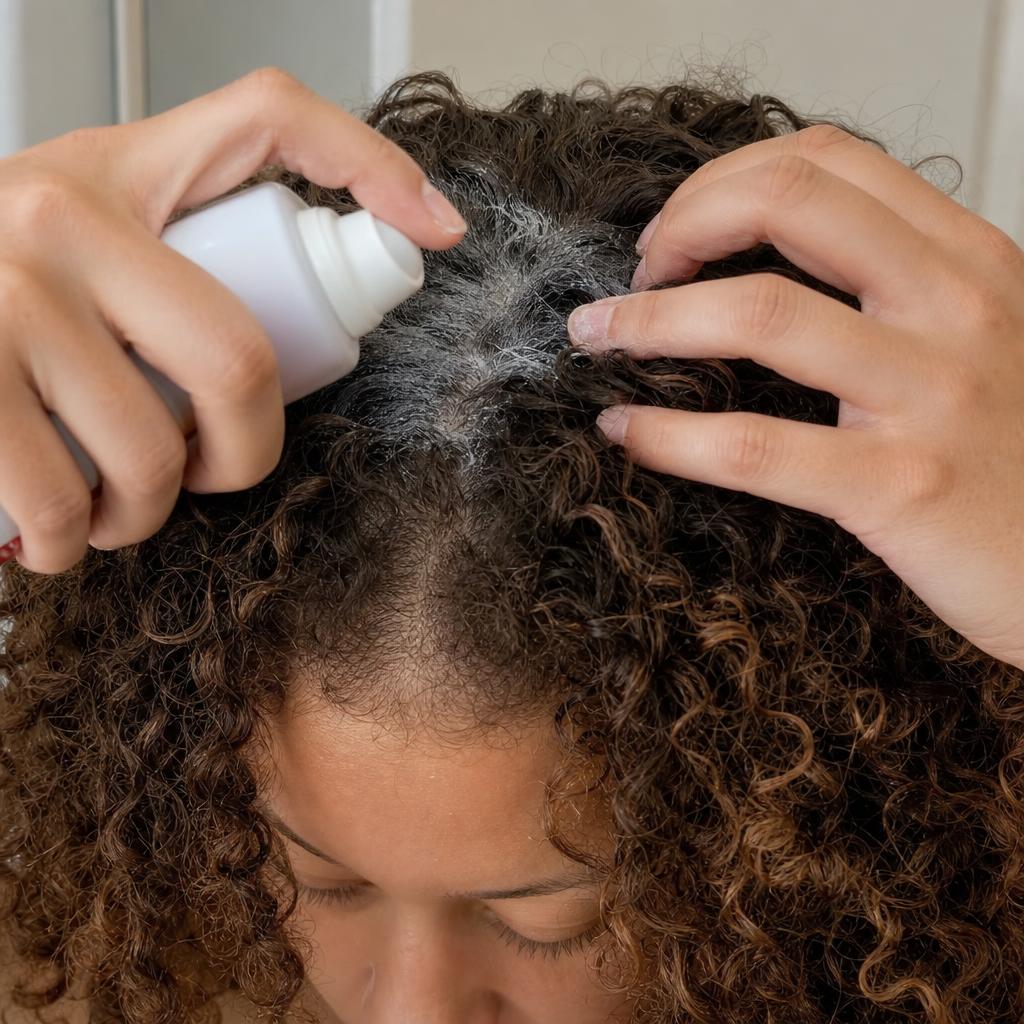
Dry shampoo can be a curly girl’s secret weapon, but you need to apply it differently than the standard spray-and-go method. First, choose a formula without heavy fragrances or white residue that will show in dark curls. Spray or dust it directly onto your scalp (not your lengths), focusing on the areas where oil concentrates most, typically your hairline, crown, and part lines.
The key is getting the product down to your actual scalp rather than coating your curls. Use your fingertips to massage it in thoroughly, breaking up any clumps. Then wait five to ten minutes before touching your hair again. This gives the starches time to absorb oil. If you have tighter curls, you might need to section your hair to reach the scalp properly. Avoid overusing dry shampoo more than two days in a row, as it can contribute to buildup.
Scalp-Only Cleansing Between Wash Days
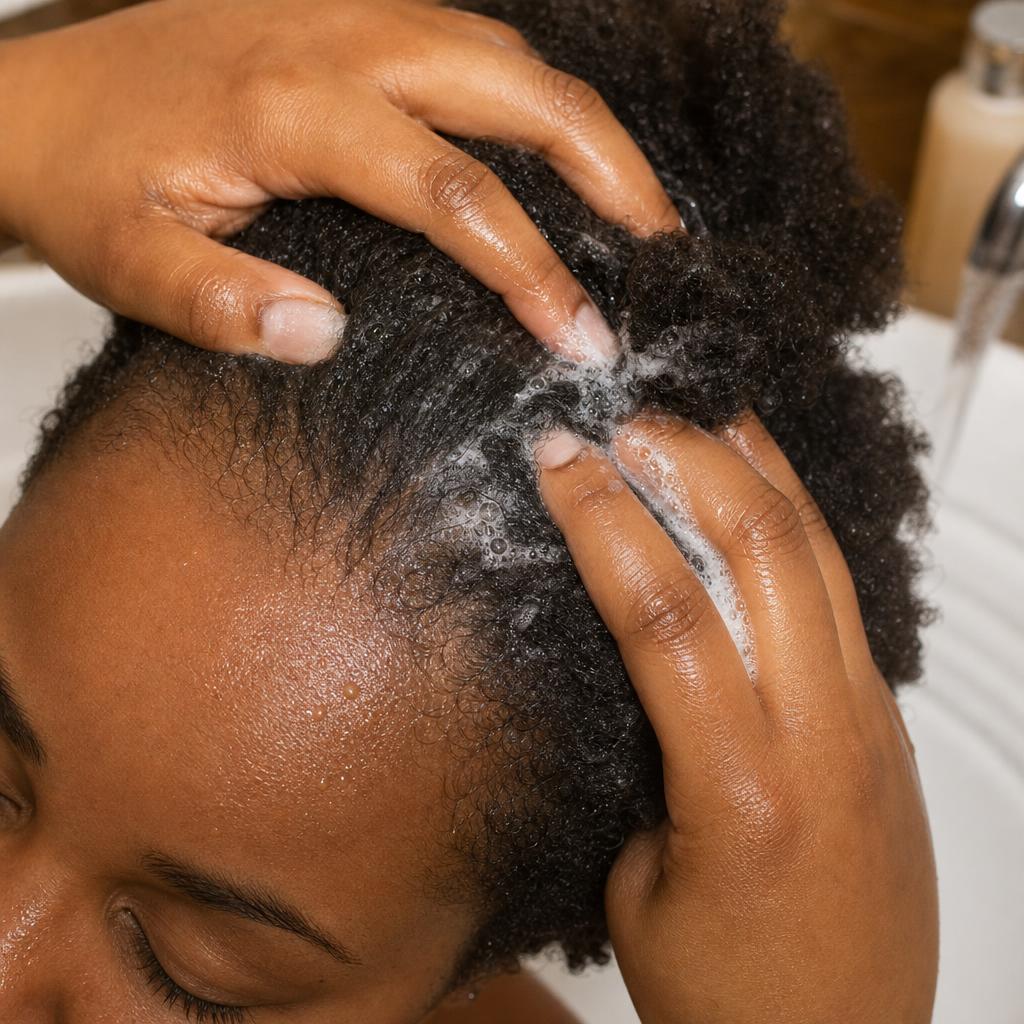
Sometimes you need to wash your roots without disturbing your curl pattern or drying out your ends. Focus a small amount of diluted shampoo exclusively on your scalp, keeping your lengths pulled away. Use your fingertips (not nails) to massage in circular motions, lifting the hair at the roots to allow water and cleanser to reach the skin. Rinse thoroughly by directing the water flow at your scalp while keeping the showerhead angle above your head.
This targeted approach lets you extend the life of your styled curls while addressing oil where it actually accumulates. Your ends don’t need cleansing every time your scalp does. Just be careful not to create tangles by roughly handling your hair during this process.
Strategic Styling to Disguise Oily Roots
When you’re between washes and oil is visible, work with your hair’s natural texture rather than fighting it. For wavy hair, try pulling the front sections away from your face into small braids, twists, or clips. This lifts the hair off your scalp where oil is most visible and adds intentional texture that disguises any flatness. For curlier textures, fluff your roots with a pick or your fingers to create volume that makes oily roots less apparent.
Changing your part line can also provide instant relief. Oil often concentrates along your usual part because that’s where scalp and hair meet most directly. Shifting your part by even half an inch exposes fresh hair and hides the oiliest section underneath. Accessories like headbands, scarves, or claw clips strategically placed at the crown can camouflage problem areas while looking intentional.
Long-Term Solutions: Rebalancing Your Scalp
Clarifying Without Over-Stripping: Finding the Right Frequency
The paradox of oily hair is that washing too often can actually trigger increased oil production. Your scalp interprets the removal of all its natural oils as a signal to ramp up sebum production, creating a cycle where you feel greasier faster after each wash. The solution isn’t to stop cleansing, but to find a frequency that removes buildup without sending your scalp into panic mode.
For most people with oily curly hair, this sweet spot lands somewhere between twice a week and once every five days. Start by gradually extending the time between washes by one day. Yes, you’ll likely feel oilier during this adjustment period, which can last two to three weeks. Use the quick fixes above to get through it. Your scalp’s oil production should eventually recalibrate to this new schedule.
Incorporate a clarifying wash about once every two to four weeks, depending on how much product you use. Clarifying with apple cider vinegar can help remove buildup without the harsh sulfates found in some clarifying shampoos. This periodic deep clean prevents the accumulation that makes hair look perpetually greasy, even right after washing.
Adjusting Your Conditioning Routine (Keep It Off the Scalp)
One of the biggest contributors to greasy-looking curly hair is conditioner applied too close to the roots. Your scalp doesn’t need conditioning. It has its own oil production system. Conditioner belongs on your mid-lengths and ends, where moisture is actually lacking. Start your conditioner application at least two to three inches away from your scalp, or even lower if your roots tend toward oiliness.
When rinsing conditioner, make sure you’re thorough. Inadequate rinsing leaves a film on the hair that looks and feels like oil, especially near the roots where water flow is weakest. Flip your head in different directions while rinsing to ensure every section gets clear water flowing through it. This is particularly important for using leave-in conditioner, which should never touch your scalp area if you struggle with oiliness.
Scalp Treatments That Regulate Oil Production
Your scalp is skin, and like the skin on your face, it responds to regular treatment. A weekly scalp massage with your fingertips (before washing) helps exfoliate dead skin cells that can trap oil and create a greasy film. You’re not trying to increase blood flow or stimulate growth here; you’re simply lifting away debris that makes oil more visible and problematic.
Some people find that ACV for scalp balance helps regulate oil over time. A diluted rinse (one part vinegar to three parts water) once a week can help rebalance scalp pH, which may influence sebaceous gland activity. Tea tree oil, diluted in a carrier, has antimicrobial properties that can address any scalp issues contributing to excess oil production. Apply these treatments to your scalp only, never your lengths.
Diet, Hormones, and Scalp Health Connections
While topical solutions address the immediate problem, significant changes in scalp oil production often trace back to internal factors. Hormonal fluctuations during menstrual cycles, pregnancy, or hormonal birth control changes can dramatically affect sebaceous gland activity. If your oily scalp appeared suddenly or worsened at a specific time, consider whether any hormonal changes coincided with it.
According to American Academy of Dermatology hair care guidelines, diet can influence scalp health. Diets high in refined carbohydrates and dairy have been linked to increased sebum production in some people, though individual responses vary significantly. B vitamins, particularly B2 and B6, play roles in regulating skin oil production. If you’ve ruled out external factors and your oily scalp persists despite proper hair care, discussing it with a dermatologist or healthcare provider might reveal underlying causes.
The Right Products for Oily Curly Hair
Lightweight Shampoos and Clarifying Options
Skip the ultra-moisturizing, cream-based cleansers if you struggle with oily roots. These formulas are designed for people with dry scalps and will only add to your grease problem. Instead, look for curly hair shampoo options that describe themselves as volumizing, balancing, or clarifying. These typically have lighter textures and more effective cleansing action without being as harsh as sulfate shampoos.
Ingredients to seek out include tea tree oil, peppermint, rosemary, or citrus extracts, all of which help cut through oil. Low-poo shampoos (sulfate-free but still cleansing) work well for regular use, while a true clarifying shampoo should be reserved for periodic deep cleans. If you’re co-washing (conditioner-only washing), this method likely isn’t right for oily-scalp curly hair, as it simply doesn’t provide enough cleansing power.
Water-Based vs. Oil-Based Styling Products
Your styling products make a massive difference in how quickly your roots look greasy. Oil-based products, heavy butters, and thick creams will all migrate to your scalp over time or weigh down roots immediately if applied too high. Water-based gels, mousses, and light creams are better choices for oily-prone hair. Check ingredient lists: if oils or butters appear in the first five ingredients, the product is probably too heavy for your roots.
Gel formulas work particularly well because they provide hold without adding oils your scalp doesn’t need. Look for clear or translucent gels rather than creamy ones. Mousses create volume at the roots while adding minimal weight. If you love a certain cream but it makes your roots greasy, try applying it only from your ears down, using a lighter product or even nothing at all near your scalp.
When to Skip Leave-Ins at the Roots
Many curly hair routines treat leave-in conditioner application as non-negotiable, but if you have oily roots, you might be better off without it on your top layers. Apply leave-in only where you need moisture (mid-lengths to ends) and keep it several inches away from your scalp. Some people with oily roots do better skipping leave-in entirely on their top layer of hair, applying it only to the hair underneath where it won’t be visible if roots get greasy.
If you insist on using leave-in, choose the lightest formula possible and apply it to soaking wet hair, which helps it distribute through the length rather than concentrating near the scalp. Spray leave-ins tend to be lighter than cream formulas and give you more control over placement.
Common Mistakes That Make Oily Hair Worse
Over-Washing and the Rebound Effect
It’s tempting to wash your hair every time it feels even slightly oily, but this creates a vicious cycle. Your scalp produces a certain amount of sebum as protection. Strip it away too frequently, and your sebaceous glands work overtime to replace it, often overcompensating. The result is hair that gets oily faster and faster, requiring more frequent washing, which triggers even more oil production.
Breaking this cycle requires patience. You need to train your scalp to produce less oil by washing less often. The first week or two will be uncomfortable. Your hair will likely get oilier than you’d prefer. Push through using dry shampoo and strategic styling. Most people find their scalp adjusts within three to four weeks, producing less oil because it’s no longer being constantly stripped.
Touching and Scrunching Throughout the Day
Every time you touch your scalp or scrunch your roots, you’re transferring oils from your hands onto your hair and mechanically moving existing scalp oils through your curls. It’s a nearly unconscious habit for many people, constantly adjusting their hair, scrunching for volume, or running fingers through curls. Each touch makes the oil problem worse and makes your hair look greasier faster.
Train yourself to keep your hands away from your hair, especially the root area. If you must touch your hair, do it only at the ends. The same goes for hair accessories, hats, or headphones that rest directly against oily areas. These items can both absorb oil (making them need frequent washing) and redistribute oil through your hair when you remove them.
Heavy Products Applied Too Close to the Scalp
The closer to your scalp you apply styling products, the greasier your roots will look and the faster oil will become visible. This is especially true for oils, creams, and butters. Even if a product works beautifully on your ends, it can be disastrous near your roots. Always apply your heaviest products to your ends first, using whatever remains on your hands for your mid-lengths. Approach your roots only with the lightest products or none at all.
Pay attention to how you apply products when your hair is wet. If you’re raking product through from roots to ends, you’re depositing the highest concentration right at the scalp. Instead, apply products in sections starting at ear level or below, or use praying hands method that keeps products on the length of your hair rather than the root area.
Frequently Asked Questions
How often should I wash oily curly hair?
Most people with oily curly hair find balance washing every two to four days, though this varies based on your specific scalp, activity level, and product use. The goal is finding a frequency that keeps your scalp clean without triggering rebound oil production. If you’re currently washing daily, try extending to every other day, then gradually to every third day as your scalp adjusts.
Can drinking more water reduce scalp oiliness?
While staying hydrated supports overall scalp health, there’s no direct evidence that drinking more water reduces sebum production. Oily scalp is primarily influenced by genetics, hormones, and how you treat your hair externally. Focus on adjusting your washing routine and product choices rather than expecting hydration alone to solve the problem.
Why does my hair get oily faster in summer?
Heat and humidity increase sebaceous gland activity, causing your scalp to produce more oil in warmer months. Sweating also makes hair appear greasier. You may need to adjust your routine seasonally, washing slightly more often or using lighter products during summer, then scaling back in cooler, drier months when oil production naturally decreases.
Is it better to use hot or cold water when washing oily hair?
Lukewarm to cool water is best for oily scalp. Hot water stimulates sebaceous glands and can trigger increased oil production, while it also strips away too much natural oil, potentially causing rebound overproduction. Cooler water cleanses effectively without shocking your scalp into overdrive, and it’s also better for preserving your curl pattern.
Will cutting my hair help with oily roots?
Shorter hair won’t change how much oil your scalp produces, but it can make oily roots less noticeable since there’s less length to weigh down. The oil also has less distance to travel on shorter curls. However, cutting your hair is a drastic step for an issue that can usually be managed through proper washing and product techniques.
Conclusion
Managing oily roots while keeping your curls moisturized requires a fundamentally different approach than treating uniformly oily hair. The combination of scalp-focused cleansing, strategic product placement, and patience while your scalp adjusts to a new routine addresses the root cause rather than just treating symptoms. Your curl pattern isn’t working against you; it’s simply revealing where you need to concentrate your efforts, with lightweight products kept away from your scalp and heavier moisture reserved for where it’s actually needed.
Start with one change this week: either extend your time between washes by a single day or commit to keeping all conditioning products at least three inches from your roots. Track how your scalp responds over the next two weeks, noting whether you’re seeing true oil production or product buildup. This single observation will guide everything else, helping you build a routine that finally balances your oily roots with your dry ends instead of fighting your hair’s natural tendencies.