Apple cider vinegar has become one of the most popular natural hair treatments in the curly community, and for good reason. When used correctly, an ACV rinse can restore shine, remove buildup, and reset your curls in ways that expensive salon treatments promise but don’t always deliver. The catch? Dilution ratios, application methods, and frequency matter enormously, and what works beautifully for loose waves can be disastrous for tight coils. This guide walks you through exactly how to use apple cider vinegar for every curl type, when it helps, and when to skip it entirely.
Why Apple Cider Vinegar Works for Curly Hair
Apple cider vinegar isn’t just a kitchen staple that got repurposed for hair care. Its effectiveness comes down to measurable chemistry that directly addresses the specific challenges curly hair faces: raised cuticles, stubborn buildup, and scalp pH imbalances that straight hair types rarely experience to the same degree.
pH Balance and the Curl Cuticle
Your hair’s natural pH sits around 4.5 to 5.5, which is slightly acidic. Most shampoos, especially clarifying shampoo formulas, push that pH higher (more alkaline), causing the hair cuticle to swell and open. For curly hair, which already has a naturally raised cuticle structure compared to straight hair, this creates frizz, dullness, and tangling.
Apple cider vinegar has a pH of approximately 2.5 to 3.5. When diluted properly (we’ll get to ratios soon), it brings your hair back to its ideal acidic range. This causes the cuticle layers to lie flat again, which is why the immediate result after an ACV rinse is often smoother, shinier hair with better-defined curl clumps. The antimicrobial properties of acetic acid (the main component in vinegar) also contribute to scalp health, though the pH-balancing effect is what creates the visible transformation in your curls.
Buildup Removal Without Stripping
Curly hair routines often involve layering products: leave-in conditioners, curl creams, gels, oils. Even if you’re using high-quality products, residue accumulates on the hair shaft and scalp over time. Hard water minerals, silicones (even water-soluble ones), and waxy ingredients from stylers create a film that weighs curls down and blocks moisture from penetrating the hair shaft.
ACV works as a gentle clarifier because its acidic nature helps dissolve these deposits without the harsh sulfates found in traditional clarifying shampoos. It’s particularly effective at breaking down mineral buildup from hard water, which is why people who struggle with oily scalp issues or limp curls despite regular washing often see dramatic improvements after introducing ACV rinses. Unlike sulfate shampoos that strip everything (including beneficial oils), ACV targets buildup while leaving your natural sebum relatively intact.
Scalp Health Benefits
The same acidity that smooths your cuticle also creates an environment on your scalp that discourages fungal overgrowth and bacterial imbalance. Many scalp issues that plague curly-haired people (itchiness, flaking, inflammation) stem from pH disruption or microbial imbalances, both of which ACV helps address.
Apple cider vinegar also helps remove dead skin cells and product residue from the scalp itself, improving follicle health. Healthier follicles produce stronger hair, which is especially important for type 4A coils and other tightly curled patterns that are naturally more fragile at the root. However, dermatologists caution that ACV should supplement, not replace, proper scalp health and hair care tips from dermatologists, including regular cleansing and moisturizing practices.
How to Make an ACV Rinse: Dilution Ratios by Hair Type
This is where most people go wrong with apple cider vinegar. Used at full strength, ACV is far too acidic and will damage your hair and irritate your scalp. The right dilution makes all the difference between a transformative treatment and a hair disaster.
Basic ACV Rinse Formula
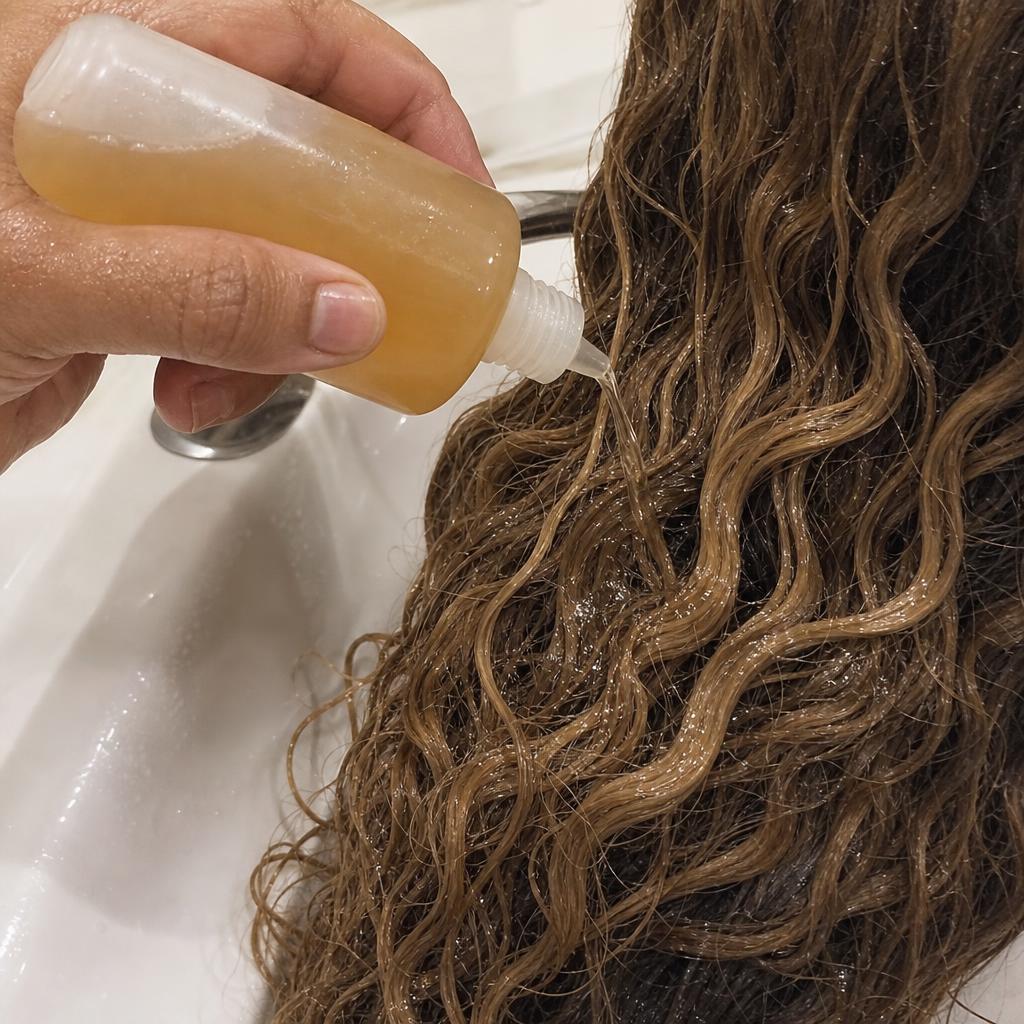
The standard dilution ratio is 1 tablespoon of apple cider vinegar to 1 cup (8 ounces) of water. This creates a solution mild enough for most curl types while still being effective at pH balancing and buildup removal. Mix the solution in an applicator bottle or a cup you can pour from, and always prepare it fresh rather than storing it for weeks.
For your first ACV rinse, start with this conservative ratio regardless of your hair type. You can always increase the strength if you don’t see results, but you can’t undo damage from a too-strong mixture.
Adjusting Strength for Waves (2a-2c)
Wavy hair, particularly type 2A hair, tends to be finer in texture and more prone to looking greasy or weighed down by products. These hair types often benefit from slightly stronger ACV rinses because they accumulate buildup faster and can handle more frequent clarifying.
For waves, you can increase to 2 tablespoons of ACV per cup of water once you’ve tested the basic ratio. Fine wavy hair also responds well to ACV when you’re dealing with limp, undefined waves that won’t hold a curl pattern. The cuticle-smoothing effect helps waves clump better and maintain definition throughout the day.
Adjusting Strength for Coils (4a-4c)
Coily hair types (4A, 4B, 4C) have different needs entirely. These curl patterns are naturally drier, more fragile, and more susceptible to protein overload. For coils, the standard 1 tablespoon per cup ratio is actually the maximum strength you should use, and many people with type 4 hair do better with an even gentler mixture: 1 to 2 teaspoons per cup of water.
Coily hair benefits more from the pH-balancing properties of ACV than from aggressive buildup removal, since these hair types typically can’t tolerate heavy product layering anyway. The goal with coils is to smooth the cuticle and enhance shine without risking the dryness that overly acidic treatments can cause.
What Kind of ACV to Buy
Choose raw, unfiltered apple cider vinegar that contains “the mother” (those cloudy strands you see floating in the bottle). Brands like Bragg are widely available and work perfectly. The mother contains beneficial enzymes and proteins, though honestly, even filtered ACV will work for the pH-balancing effects.
Avoid ACV rinse products that come pre-diluted in fancy bottles at premium prices. You’re paying for water and packaging. A $5 bottle of raw ACV will give you months of rinses when you dilute it yourself.
How to Apply an Apple Cider Vinegar Rinse
Application method matters as much as dilution ratio. Done correctly, an ACV rinse takes less than five minutes and slots easily into your existing wash routine.
Step-by-Step Application Method
Apply your ACV rinse after shampooing and conditioning, not before. This is crucial. Shampoo cleanses, conditioner adds moisture and slip, and then the ACV rinse comes in as a final pH-balancing step that seals everything in.
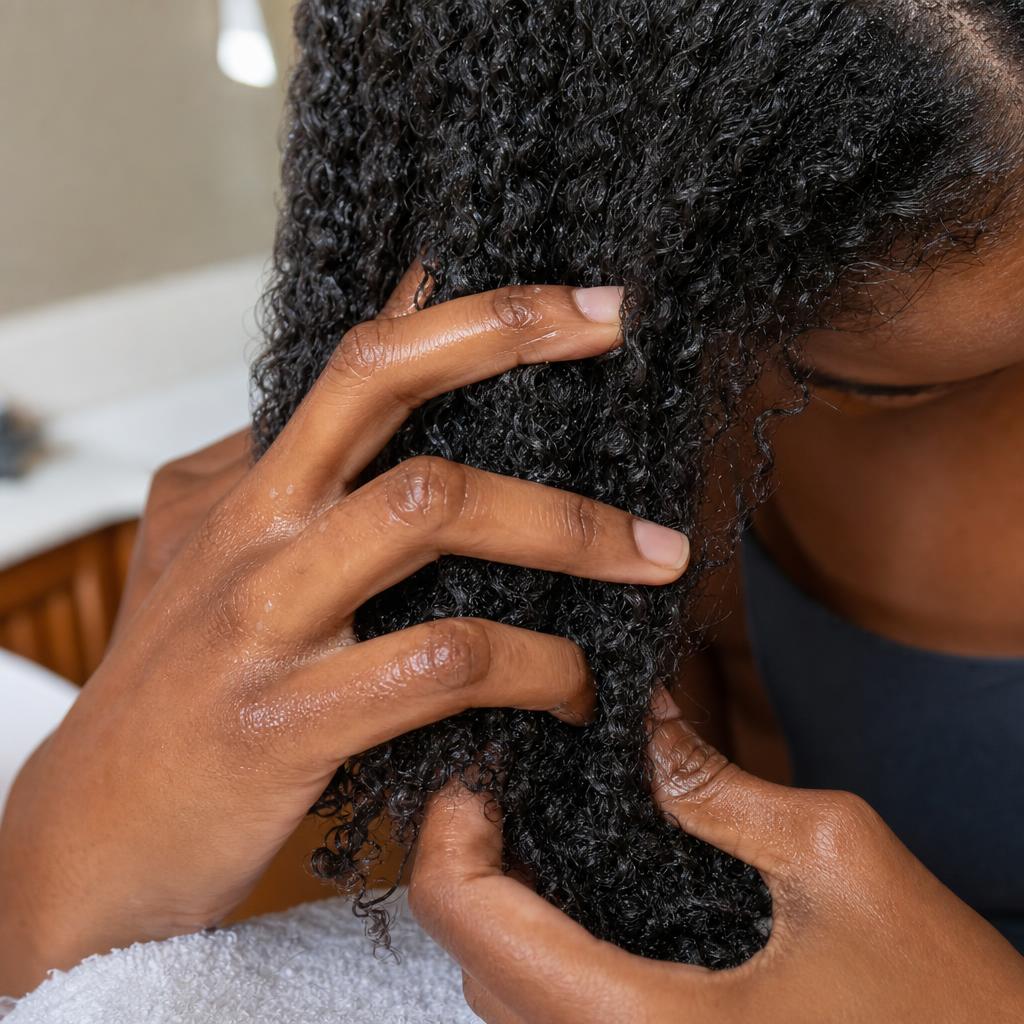
After rinsing out your conditioner, pour the diluted ACV mixture slowly over your entire scalp, working in sections to ensure even coverage. Use your fingertips to gently massage the rinse into your scalp for 30 to 60 seconds. Then work the remaining liquid through your lengths by scrunching or smoothing, depending on your curl pattern.
For low porosity hair, which resists both moisture and product penetration, focus the ACV rinse more on the scalp and roots rather than saturating your lengths. Low porosity curls can become overly acidic if you concentrate ACV on the hair shaft itself, leading to brittle, crunchy texture.
How Long to Leave It On
You don’t need to leave an ACV rinse on for extended periods. The pH-balancing effect happens almost immediately on contact. Thirty seconds to two minutes is plenty of time for the rinse to work. If you have a particularly itchy or flaky scalp, you can extend it to three or four minutes, but leaving ACV on longer than that doesn’t increase benefits and can actually start to irritate sensitive scalps.
Some people experience a slight tingling sensation during application, which is normal if you have any minor scalp irritation or small scratches. If you feel burning or significant discomfort, rinse immediately. Your mixture is either too strong, or you have a sensitivity to vinegar.
Rinsing (or Not): What Works Best
This is the most debated aspect of ACV rinses. Some curl experts swear by rinsing the ACV out completely with cool water after the treatment period. Others advocate for leaving it in, claiming the residual acidity continues to benefit your hair as it dries.
The reality is that it depends on your hair type and the strength of your mixture. For fine, wavy hair that gets greasy easily, rinsing out the ACV thoroughly prevents any potential residue or smell. For thick, coily hair that needs all the moisture retention it can get, leaving in a very dilute ACV rinse (the 1 teaspoon per cup ratio) can actually help seal the cuticle without causing dryness.
Most people find a middle ground works best: rinse with cool water for 15 to 30 seconds rather than doing a full, thorough rinse. This removes excess ACV while leaving behind enough to maintain the pH benefit.
How Often to Use ACV Rinses by Curl Type
Frequency is where people most commonly overdo it with ACV. More is not better. Apple cider vinegar is a clarifying treatment, not a daily conditioner, and treating it like something you should do every wash day will backfire.
Frequency for Fine Wavy Hair
Wavy hair types (2A, 2B, 2C) can typically handle ACV rinses every one to two weeks. If you have very fine, easily-weighed-down waves and you live in an area with hard water, you might even benefit from weekly rinses. Pay attention to how your hair responds: if your waves are bouncy, shiny, and well-defined after an ACV rinse, you’ve found your rhythm.
If you’re using a lot of styling products or you have an oily scalp that requires frequent washing, weekly ACV rinses can help prevent the buildup cycle that makes waves look stringy or limp.
Frequency for Thick Curly Hair
Medium to thick curly hair (types 3A through 3C) generally does best with ACV rinses every two to three weeks. These curl patterns don’t accumulate buildup as quickly as fine waves, and they need more moisture retention than frequent acidic treatments allow.
Use buildup as your guide rather than sticking to a rigid schedule. When your curls start feeling coated, looking dull, or losing their usual definition despite proper styling, that’s when an ACV rinse will deliver the most noticeable reset.
Frequency for Coily Hair
Coily hair types should approach ACV with caution regarding frequency. Once every three to four weeks is plenty for most people with 4A, 4B, or 4C hair. Some people with very dry, protein-sensitive coils do better limiting ACV rinses to once every six to eight weeks, using them only when they notice significant buildup that regular shampooing won’t address.
Coily hair is naturally more porous along the length (even if you have low porosity at the cuticle), which means acidic treatments penetrate more readily and can disrupt moisture balance if overused. When in doubt, do ACV rinses less often rather than more often.
Signs You’re Using ACV Too Often
Your hair will tell you when you’ve crossed the line with ACV frequency. Watch for these warning signs: dryness or straw-like texture even after deep conditioning, increased breakage or shedding, curls that look stringy or won’t clump properly, scalp irritation or increased flaking, and hair that feels rough or tangles more than usual.
If you notice any of these issues after starting ACV rinses, cut back immediately. Skip your next planned rinse and focus on moisture-rich deep conditioning treatments to rebalance your hair.
When ACV Doesn’t Work (and What to Try Instead)
Apple cider vinegar isn’t a universal solution, despite its popularity. Some hair types and conditions respond poorly to ACV, and knowing when it’s not right for you saves you from weeks of frustration.
Protein-Sensitive Hair and ACV
If your hair reacts badly to protein treatments, becoming stiff, brittle, or straw-like, you might also struggle with ACV. While apple cider vinegar isn’t a protein treatment, the way it tightens and smooths the cuticle can create a similar effect in protein-sensitive hair. The hair becomes temporarily stronger but loses elasticity and moisture retention.
People with protein sensitivity often notice their hair feels initially great after an ACV rinse but then becomes increasingly dry and prone to breakage over the following days. If this happens to you, ACV rinses simply aren’t compatible with your hair chemistry, regardless of your curl type.
Low Porosity Hair Concerns
The relationship between low porosity hair types and ACV is complicated. In theory, the cuticle-sealing properties of ACV should benefit low porosity hair by enhancing its naturally smooth cuticle structure. In practice, many people with low porosity curls find that ACV makes their hair even more resistant to moisture absorption.
If you have low porosity curls, try limiting ACV to just your scalp and roots rather than saturating your lengths. Use the most dilute ratio (1 teaspoon per cup) and rinse thoroughly. If you still find your hair feels coated or moisture won’t penetrate even after deep conditioning, ACV isn’t helping you, and you should look at alternatives.
Alternative Clarifying Rinses
When ACV doesn’t work, you have other options for clarifying and pH-balancing your curls. A rice water rinse offers similar smoothing and shine benefits with less acidity, making it gentler for protein-sensitive or very dry hair. The starchy water left over from rinsing rice can be diluted and used as a final rinse.
Aloe vera juice diluted with water (1:3 ratio) provides pH balancing without the protein-like effects of ACV. It’s particularly good for people who need buildup removal but have hair that becomes brittle easily.
For stubborn buildup that gentle rinses won’t touch, a traditional clarifying shampoo used once a month is more effective than trying to make ACV work when your hair clearly doesn’t like it. Choose a the right shampoo for your curls and follow immediately with a deep conditioning treatment to restore moisture.
Frequently Asked Questions
- Will my hair smell like vinegar after an ACV rinse?
- The vinegar smell dissipates almost completely as your hair dries, especially if you rinse the ACV out with water. By the time your hair is fully dry, any remaining scent is undetectable. If you’re concerned about smell, adding a few drops of essential oil (lavender or rosemary work well) to your diluted mixture can provide a pleasant scent during application.
- Can I use white vinegar instead of apple cider vinegar?
- White vinegar works for pH balancing since it has similar acidity, but it lacks the beneficial enzymes and nutrients found in raw apple cider vinegar. If ACV isn’t available, white vinegar diluted at the same ratios will still smooth your cuticle and remove buildup, but you won’t get the additional scalp health benefits.
- Should I use ACV before or after deep conditioning?
- After. Deep conditioning treatments work best on hair with a slightly raised cuticle, which allows the moisturizing ingredients to penetrate. If you use ACV first, you’ll seal the cuticle and reduce how much benefit you get from your deep conditioner. The proper order is: shampoo, condition or deep condition, then ACV rinse as the final step.
- Can ACV lighten my hair color?
- Apple cider vinegar is acidic but not a bleaching agent. It won’t significantly lighten dark hair. Some people with very light blonde or color-treated hair notice minimal lightening over time with frequent use, but this is more about the acidic environment gradually lifting color molecules rather than active bleaching. If you have color-treated hair, use ACV rinses less frequently and always follow with a color-protecting conditioner.
- Is it normal for my scalp to tingle during an ACV rinse?
- Mild tingling is normal, especially if you have any minor scalp irritation or sensitivity. It should feel like a slight cooling or tingling sensation, not burning. If you experience burning, stinging, or significant discomfort, your mixture is too strong or you have a sensitivity to vinegar. Rinse immediately and either dilute your mixture more next time or skip ACV rinses entirely.
Conclusion
Apple cider vinegar rinses work beautifully for curly hair when you match the dilution strength, application method, and frequency to your specific curl type and hair needs. The science behind ACV is solid: it rebalances pH, removes buildup, and creates the smooth cuticle structure that gives you defined, shiny curls. But it’s not a one-size-fits-all treatment, and recognizing when ACV isn’t working for your hair is just as important as knowing how to use it correctly.
Start with a conservative dilution (1 tablespoon per cup of water), apply after conditioning, and use it no more than every two weeks while you learn how your hair responds. Your curls will show you whether they love the reset that ACV provides or whether gentler alternatives serve you better. The goal isn’t to follow trends but to give your specific curl pattern exactly what it needs to thrive.